
Fish Cleaning and Cutting Guide in Pakistan: Whole, Gutted, Headless, Curry Cut, Steaks and Fillets

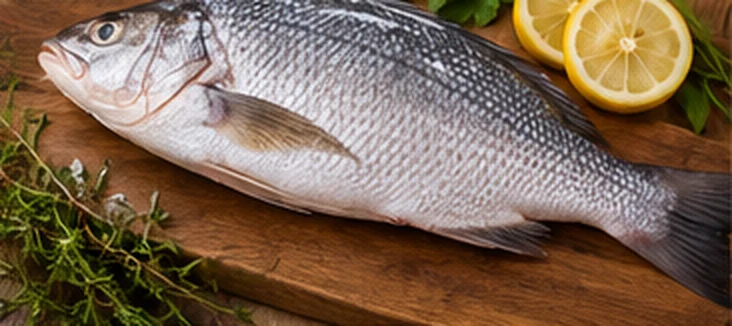
Quick answer: The best fish cut depends on your dish. Whole fish suits whole-fish frying and baking; whole gutted keeps the head with organs removed; headless gutted removes both; steaks or slices suit tawa fry, grilling and curry; curry cut is for salan and gravy; fillets suit pan-frying and baking; and boneless fingers suit snacks. Not every fish suits every cut, and at Ilyas Fish fish is weighed whole before cleaning, so prepared weight is lower.
Buying fish is only the first part of a good seafood meal. How the fish is cleaned and cut affects cooking time, presentation, portion size and the final dish. In Pakistan, buyers choose between whole fish, gutted, headless, slices, steaks, curry cuts and boneless fillets — terms that don’t always mean the same thing.
This guide explains the common cleaning and cutting methods, what each includes, which cooking methods suit each cut, and why fish weighs less after cleaning.
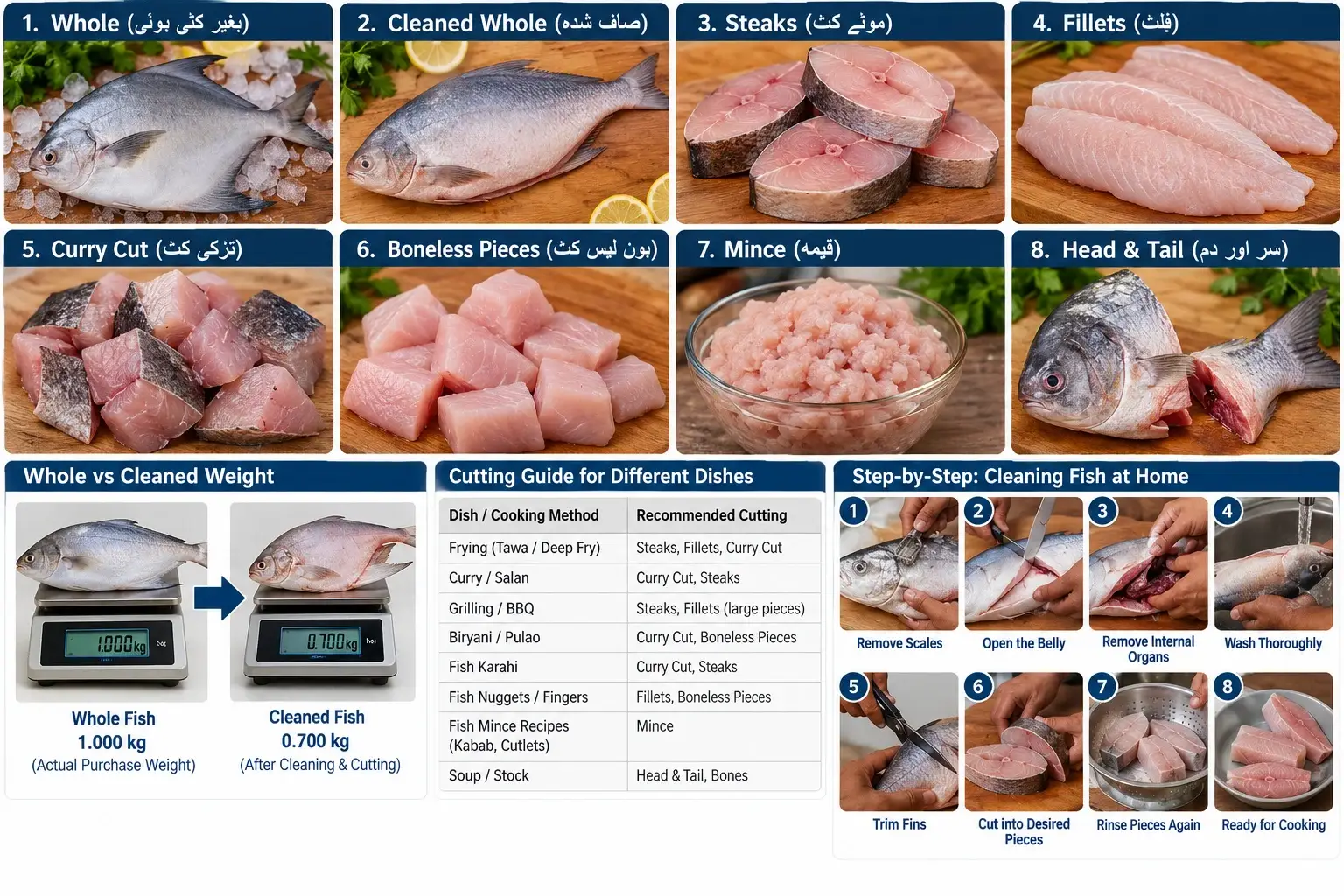
1. What Does Fish Cleaning Include?
Scaling
Removing the outer scales from fish that have them. Some species have small, firmly attached scales; not every fish needs scaling, and the skin can be kept or removed depending on the recipe.
Gutting
Removing the internal organs and digestive tract. The belly is opened carefully, the organs removed and the cavity cleaned with clean water — one of the most common requests.
Gill Removal
The gills behind the head are removed in most whole-fish cleaning; the head itself may stay or be removed depending on the cut.
Fin and Tail Trimming
Fins or tail can be trimmed, though some recipes keep them for a natural shape.
Final Washing and Inspection
The fish is checked for leftover internal matter and loose scales, rinsed with clean water, drained and kept chilled.

2. Whole Fish – Uncleaned
Supplied in its original form with head, organs, scales, fins, tail and skin. Useful if you prefer to prepare it yourself or use different parts of the fish. Best for traditional whole-fish frying, baking, grilling, stuffed fish and custom cutting at home — but it needs full cleaning before cooking.
3. Whole Gutted Fish
The fish keeps its head, tail, body, skin and fins, but the organs and digestive tract are removed. Confirm separately whether scaling and gill removal are included. Ideal for whole-fish frying, baking, roasting, grilling, steaming and stuffed fish — perfect for serving a complete fish like White Pomfret.
4. Headless and Gutted Fish
Both the head and organs are removed, and the body stays mostly intact. It suits fish curry, pan-frying, baking, grilling and portioning.
Gutted vs headless gutted: a gutted fish can still have its head; a headless gutted fish has both the head and organs removed.
5. Fish Slices and Steaks

Steaks are cut across the body, usually with a section of the central bone, flesh and skin. They are great for Pakistani masala fry, tawa fish, grilling, BBQ, curry and pan-frying. Larger fish such as Surmai, Tuna and Cobia make the best steaks. Thick steaks are easy to season and turn, and the bone helps them hold their shape — but steaks are not boneless.
6. Curry Cut Fish

Fish divided into smaller portions for gravy — Pakistani fish curry, salan, tomato gravy and fish masala. A regular curry cut usually keeps the central bone or ribs; if you want boneless curry pieces, ask for fillet or boneless preparation. Avoid cutting delicate fish too small, or it may break while cooking.
7. Fish Fillets

A fillet is flesh removed from one side of the fish along the backbone; a round fish gives two main fillets, skin-on or skinless. Fillets are flatter with fewer large bones, but small pin bones may remain unless specifically removed, so “boneless” is not an absolute guarantee. Best for pan-fried, grilled and baked fish, sandwiches, burgers, fish fingers and breaded portions.
Not every fish can be filleted: size, body shape, flesh thickness and bone structure matter. Larger fish like Rawas give good fillets; small fish are usually better whole or in curry.
8. Boneless Fish Pieces, Biscuits and Fingers
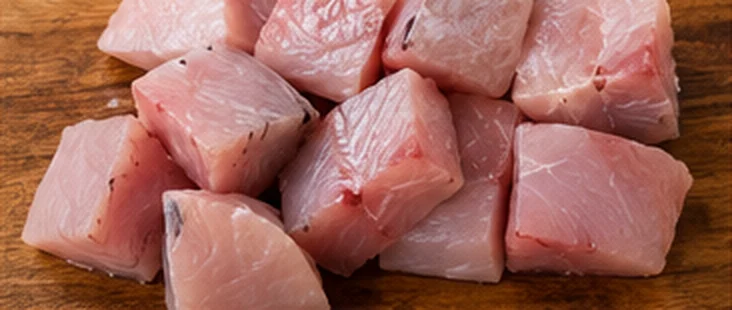
Boneless preparations are cut from suitable flesh after removing the backbone and identifiable bones.
- Boneless biscuits: small, compact pieces for fish bites, fish masala, breaded seafood and quick pan-fried dishes.
- Boneless fingers: narrow strips, coated in flour, egg and breadcrumbs, for fish fingers, burgers, children’s meals and party snacks.
Proper boneless preparation involves careful trimming and inspection, but always check the fish before serving, especially to children.
9. Fish Steak vs Fish Fillet

| Feature | Fish Steak | Fish Fillet |
|---|---|---|
| Cutting direction | Across the body | Along the backbone |
| Central bone | Usually present | Removed |
| Shape | Thick cross-section | Flat portion |
| Skin | Often kept | Skin-on or skinless |
| Best for | Tawa, curry, grilling | Pan-frying, baking, grilling |
| Small bones | May be present | Pin bones may remain |
Choose steaks for traditional fish fry, tawa and bone-in curry; choose fillets for baking, pan-frying and fish sandwiches.
10. Which Cut Is Best for Each Pakistani Recipe?
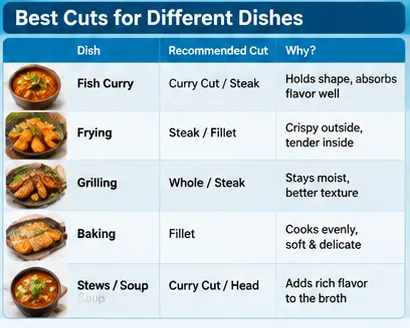
| Recipe | Recommended Cut | Why |
|---|---|---|
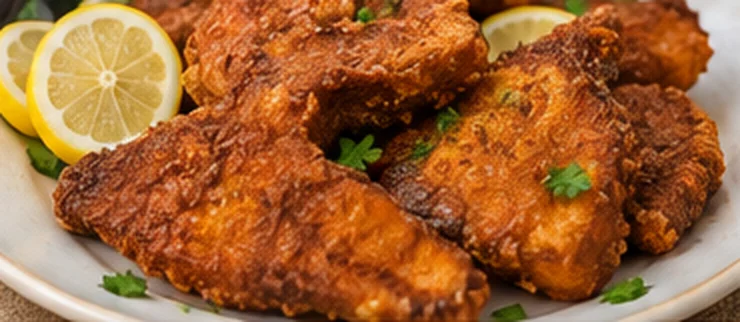
| Pakistani Fish Fry | Steaks or whole fish | Easy to season and fry |
| Tawa Fish | Steaks | Thick portions hold their shape |
| Fish Curry | Curry cut | Easy portions for gravy |
| Grilled Fish | Steaks or fillets | Good thickness and handling |
| Whole Fried Pomfret | Whole gutted | Whole-fish presentation |
| Baked Fish | Whole gutted or fillet | Depends on recipe and size |
| Fish Fingers | Boneless fingers | Even strips |
| Fish Burger | Fillet | Flat portions |
| Fish Biryani | Curry-cut pieces | Easy to layer |
For more ideas, read our guide to the Best Fish for Frying in Pakistan.
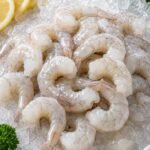
11. Prawn Cleaning and Peeling Options

- Whole uncleaned: head, shell, legs and tail kept — adds flavour when cooked whole.
- Headless, shell-on: head removed, shell and tail kept.
- Peeled and deveined, tail-on: shell and vein removed, tail kept for presentation.
- Fully peeled and deveined: head, shell, tail and vein removed — ideal for prawn karahi, garlic butter prawns, biryani, fried rice and pasta.
- Butterfly: opened along the back and flattened for grilling and frying.
Browse our Tiger Prawns and other prawns, and confirm your preferred preparation when ordering.
12. Why Does Fish Weigh Less After Cleaning?
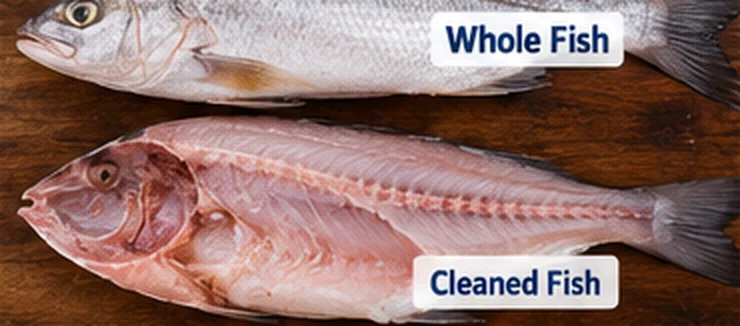
At Ilyas Fish, fish is weighed whole before cleaning and cutting. Preparation removes parts such as the head, organs, scales, fins, backbone and trimmings, so the prepared weight is lower. The amount depends on the species, size and cut — filleting and boneless preparation remove more than basic gutting. There is no single weight-loss percentage for all fish.
When comparing prices, always check whether they are based on whole or prepared weight. Read more in our Fresh Fish Buying Guide in Karachi.
13. Does Every Fish Have the Same Cutting Options?
- Size: small fish may not give practical fillets and are often better whole or in curry.
- Body shape: long round-bodied and flat fish give different portions.
- Bone structure: some fish, like Rohu, have many fine bones that a fillet may not fully remove.
- Flesh texture: firm fish hold their shape better; delicate fish need gentle handling.
- Product options: always check the cutting choices on each product page.
To identify fish correctly by their local and English names, see Fish Names in Pakistan.
14. What to Check Before Ordering Cleaned Fish
- Fish identity: check the English and local name.
- Size and price.
- Weighing method: whole or prepared weight.
- Cleaning: gutted, headless or other.
- Cutting style: steaks, curry cut, fillets and so on.
- Bones: ask about pin-bone removal or deboning.
- Delivery: how the fish is packed and kept chilled.
- Final review of product, quantity and preparation before checkout.
15. Safe Fish Cleaning and Handling at Home
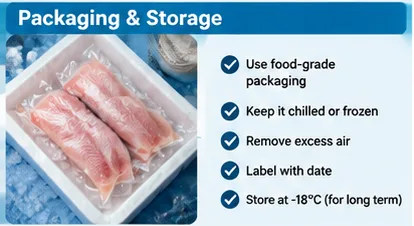
- Clean equipment: use a clean board and knife, and wash them after handling raw fish.
- Safe water: rinse fish with clean, drinkable water.
- No cross-contamination: keep raw fish away from cooked food and salads, and wash your hands.
- Keep it chilled: refrigerate at 4°C or below; cook within two days or freeze.
- Thaw safely: in the refrigerator, not on the counter.
- Cook thoroughly: to about 63°C (145°F) inside.
16. Fish Cleaning and Cutting at Ilyas Fish

Ilyas Fish buys seafood from Karachi’s fish markets and Karachi Fish Harbour, and offers free cleaning and cutting — whole gutted, headless, curry cut, slices, fillet and boneless. Fish is weighed whole before preparation, and available cuts vary by species and size, so check each product page. For a special preparation, message us on WhatsApp before ordering.
Frequently Asked Questions
What is the difference between whole fish and gutted fish?
Whole uncleaned fish keeps its organs; gutted fish has them removed, though the head can stay.
What does headless gutted fish mean?
The head and organs are removed; skin, scales and fins may stay depending on the order.
What is curry cut fish?
Smaller pieces for gravy or salan, usually with bones unless boneless is requested.
What is the difference between slices and steaks?
Both are cross-section cuts across the body that usually keep the central bone.
Are fish fillets completely boneless?
Not always — the backbone is removed, but small pin bones can remain.
Which fish cut is best for frying?
Steaks for masala and tawa fry, suitable whole fish for whole fry, or fillets for pan-frying.
Which cut is best for Pakistani curry?
Curry cut.
Why does fish weigh less after cleaning?
Cleaning removes the head, organs, scales, fins or bones; the loss depends on species and cut.
Can small fish be made into fillets?
Often not practically; whole-fish preparation is usually better.
Does Ilyas Fish provide free cleaning and cutting?
Yes, cleaning and cutting are free.
Can I request boneless fish?
Yes, where the fish and size allow — confirm before ordering.
Final Thoughts
Whole fish suits traditional presentation, steaks are great for frying and grilling, curry cuts are ideal for gravy, and fillets give easy portions for modern recipes. Knowing these differences also helps you compare prices fairly and understand why prepared fish weighs less. Explore more practical seafood advice in the Ilyas Fish Knowledge Hub.

2 thoughts on “Fish Cleaning and Cutting Guide in Pakistan: Whole, Gutted, Headless, Curry Cut, Steaks and Fillets”